PAPER
Tilt it, keep it left
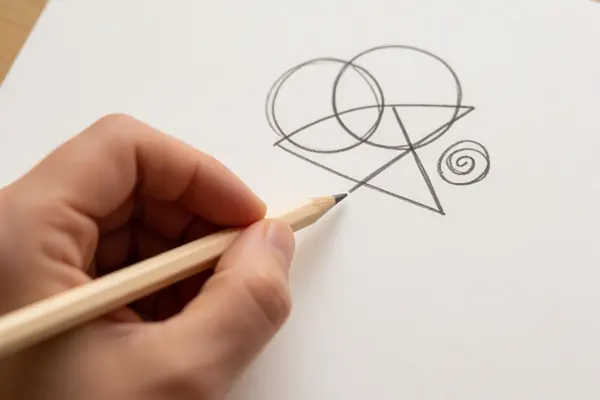
NHS occupational therapy advice says to tilt the paper no more than 45 degrees and keep it mainly on the same side of the body as the writing hand.
Check a problem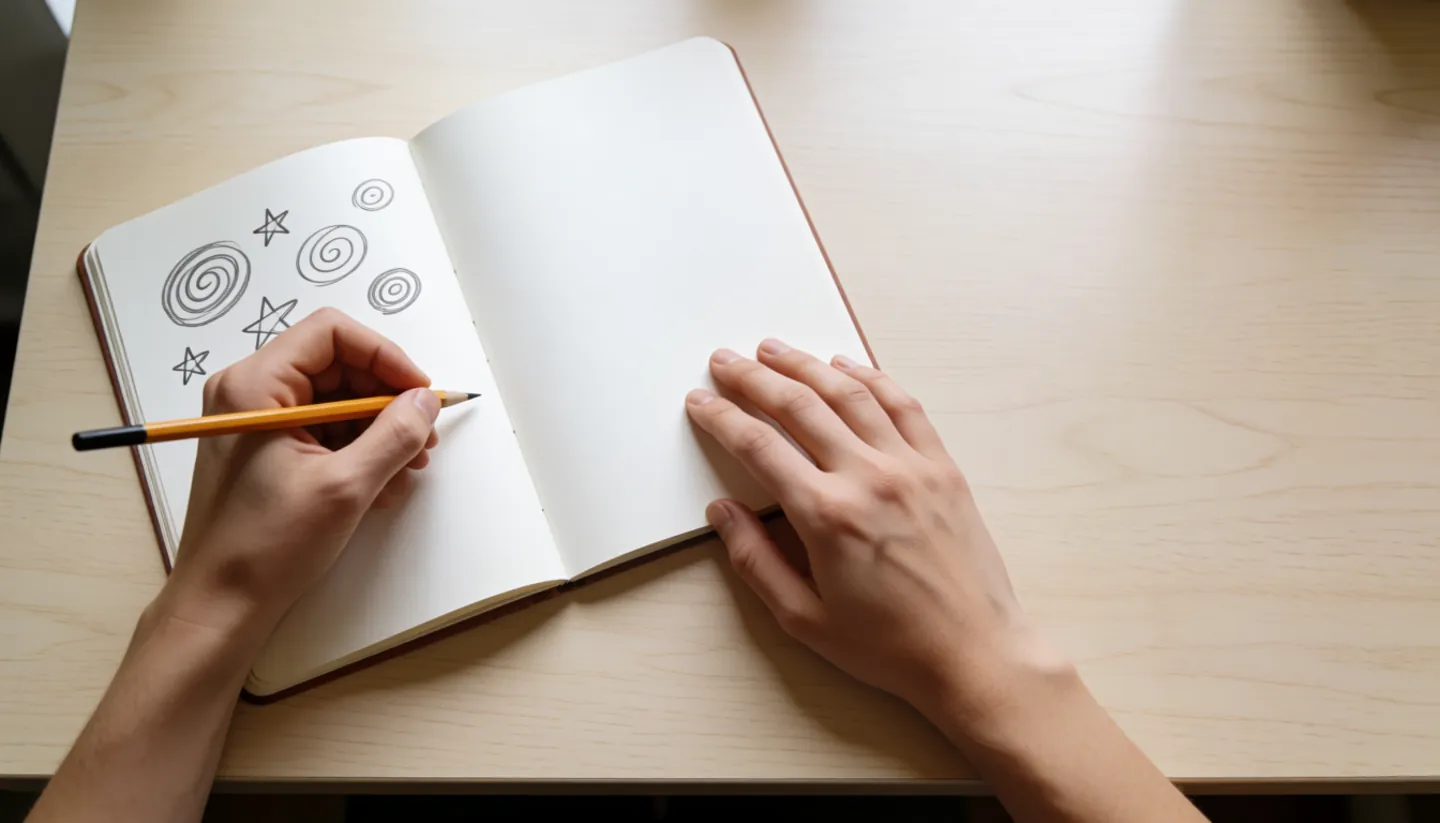
FOR LEFT-HANDED DOODLERS
1 IN 10 of us lead left
AI-generated image, not a photograph of a real person or place.
About one person in ten leads with the left hand.
Most desks, rooms and habits are set up for the other nine. A few small changes to where the paper sits and how the pencil is held make drawing and writing cleaner and more comfortable.
THE SHORT ANSWER
Most fixes are about the paper, the grip and the seat.
All three come from NHS handwriting advice.
PAPER
NHS occupational therapy advice says to tilt the paper no more than 45 degrees and keep it mainly on the same side of the body as the writing hand.
Check a problemGRIP
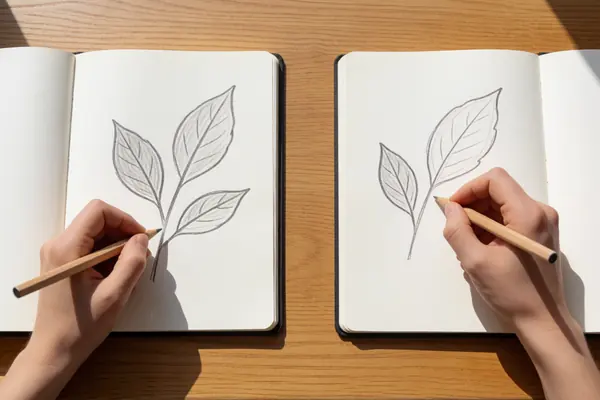
Holding the pencil at least 3 cm from the point may help you see what you have just drawn, and keeping the hand below the line helps avoid smudges.
Try the set-upSEAT
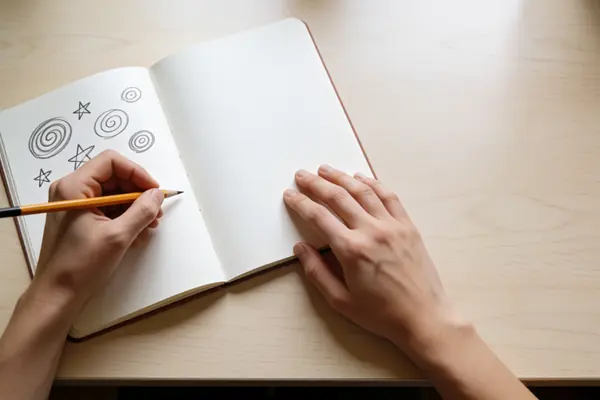
Left-handers should sit on the left-hand side of a right-hander, so the two drawing arms do not collide.
See the numbers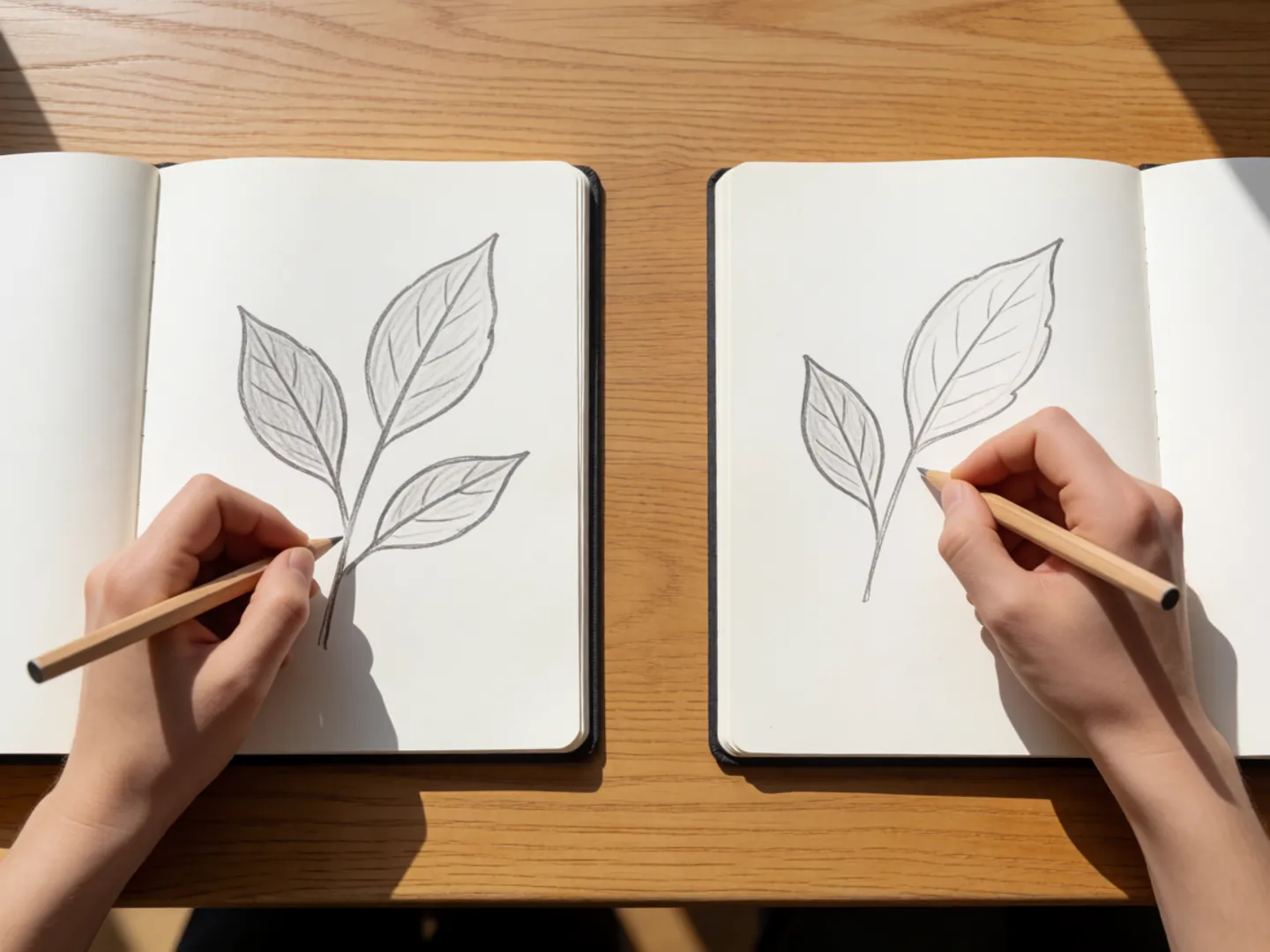
FOUR CHANGES TO TRY
None of these needs special kit. They come from NHS children's occupational therapy handwriting advice, and they are easy to try at any age.
Keep the page mainly on the same side of your body as the hand you draw with.
A tilt of up to 45 degrees lets the wrist sit below the line instead of hooking over it.
Rest your forearm on the desk and slide the paper up as you work down the page.
Fast-drying, non-smudging ink means less of the drawing ends up on the side of your hand.
TWO NUMBERS WORTH KNOWING
One figure from 2.4 million people,
one from a gene study of 1.7 million.
≈ 10.6%
People who are left-handed
A 2020 analysis of 200 studies covering 2,396,170 people put the best estimate at 10.6%, ranging from 9.3% on the strictest definition to 18.1% for anyone not right-handed.
PREVALENCE · PSYCHOLOGICAL BULLETIN 2020
48 variants
Genetic variants linked to handedness
A gene study of more than 1.7 million people found 41 regions linked to left-handedness and 7 to ambidexterity. Genes explained only part of it: narrow-sense heritability was estimated at 12%.
GENES · NATURE HUMAN BEHAVIOUR 2020
The 2020 prevalence review also found that rates vary with how handedness is measured, and with cultural factors such as pressure against using the left hand.
A QUICK PROBLEM CHECK
Pick a common left-handed niggle to see the matching tip. The bar shows roughly how big a change to your set-up the tip asks for.
Based on West Suffolk NHS children's occupational therapy handwriting strategies. General information, not medical or therapy advice.
LEFT, RIGHT OR BOTH
Researchers usually ask which hand you write with, but plenty of people split tasks between their hands. The 2020 review found that about 9% of people use different hands for different jobs.
The big 2020 gene study counted 2.1% of its participants as ambidextrous, and found that the genes linked to ambidexterity overlapped only weakly with those linked to left-handedness.
In conversation
The largest review so far, of 200 studies and about 2.4 million people, gave a best estimate of 10.6%. The figure ranged from 9.3% to 18.1% depending on how strictly left-handedness was defined.
Partly. A 2020 study of more than 1.7 million people found 48 genetic variants linked to handedness, but genes explained only a modest share: narrow-sense heritability was estimated at 12%.
NHS occupational therapy advice says to tilt the paper no more than 45 degrees, keep it mainly on the same side as the writing hand, rest the forearm and move the paper up rather than the arm down.
Keep your hand below the line you are working on, hold the pencil at least 3 cm from the point, and try a fast-drying, non-smudging pen.
On the left-hand side of a right-hander, or next to another left-hander, so the two drawing or writing arms do not bump.
Each figure on this page comes from the sources below.
ABOUT THIS NAME
doodler.us is part of the DoodleSale portfolio. It isn't in an auction right now, but you can ask about leasing it.